

Views, Events, and Invitations
This guide teaches the everyday work of the calendar: choosing the view that fits the task, creating and editing an event with every field explained, reading the detail card, keeping a private event private, and finding anything with search. After this page you will move through your calendar quickly and never lose an event to a wrong setting.
The Views
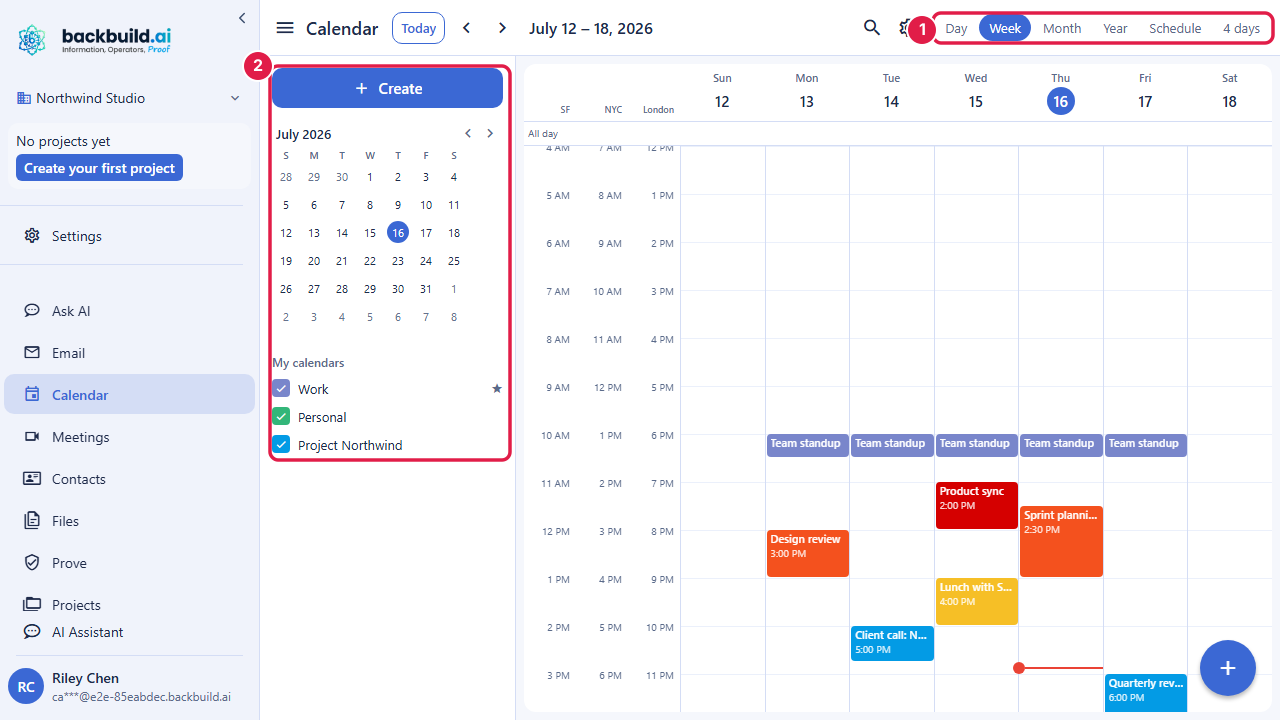
After this section you will pick the right view for what you are doing. The view switcher sits in the top bar. Each view steps forward and back by its own unit when you use the previous and next chevrons, and the Today button always returns you to the current date.
- Day shows a single day as an hour-by-hour time grid.
- Week shows seven days side by side, the default for most people.
- Month shows the familiar wall-calendar grid.
- Year shows the whole year at a glance for spotting busy stretches.
- Schedule shows an agenda list of what is coming, one event after another.
- 4 days is a custom multi-day view when a week is too much and a day is too little.
The left rail carries the Create button, a mini-month date picker (click any day to move the grid there), and your calendar lists. You can toggle the rail open and closed from the top bar to give the grid more room.
Create and Edit an Event
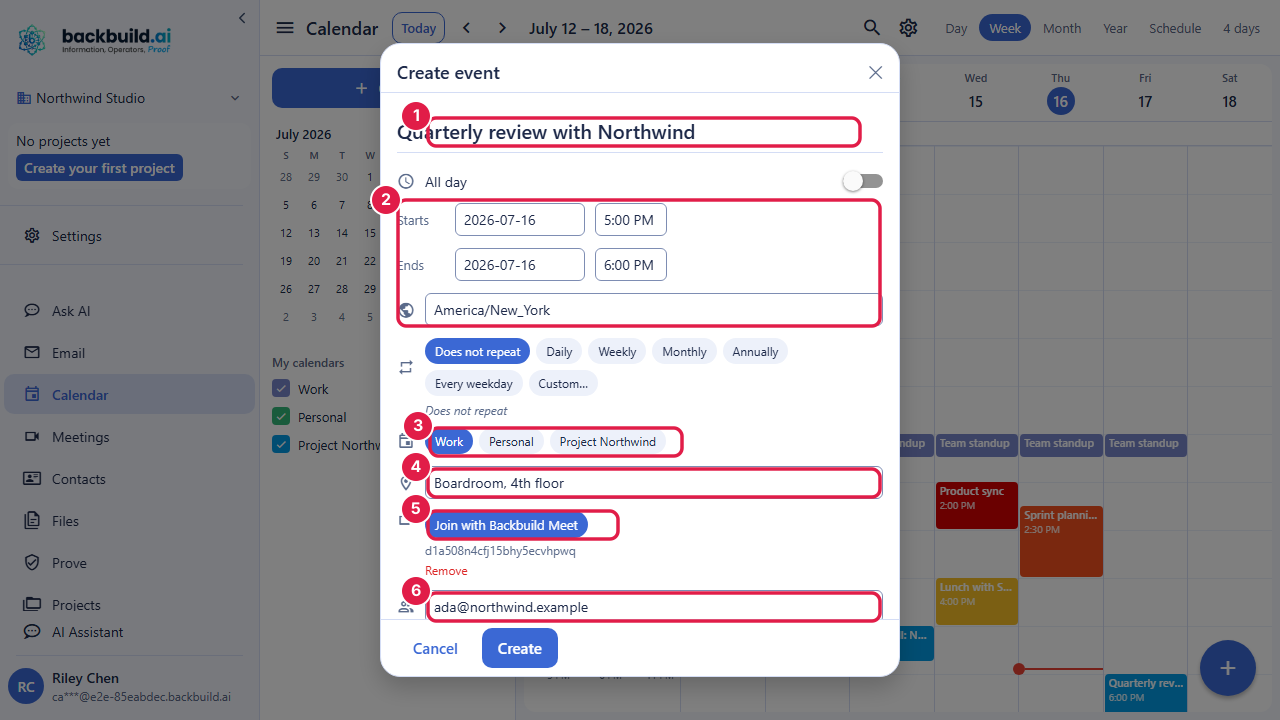
After this section you will know what every field on the event editor does. Open the editor by clicking an open slot (it pre-fills the day and hour you clicked) or by pressing Create. Editing an existing event opens the same editor with its values loaded.
- Title: the name of the event, shown on the grid.
- All-day toggle: switch between a timed event and a day-long one. An all-day event uses the dates you see; a multi-day all-day event runs through the last day you set, inclusive.
- Starts and Ends: a date field and, for timed events, a time field that follows your 12-hour or 24-hour clock preference.
- Time zone: shown for timed events and set to your browser's zone by default. Change it when you are scheduling an event that is anchored to a different place. See Settings and Time Zones.
- Repeat: Does not repeat, Daily, Weekly, Monthly, Annually, Every weekday, or a Custom pattern you build. See Recurring Events.
- Calendar: which of your calendars the event belongs to. Only calendars you can write to appear here.
- Location: a free-text place, address, or room.
- Backbuild Meet: choose Add Backbuild Meet to attach a Backbuild meeting, so its join link and meeting code travel on the invitation. Once attached you can join it or remove it.
- Guests: add attendees by email, separated by commas, semicolons, or spaces. When you create an event that has a Backbuild meeting, each guest is emailed an invitation. See Inviting Guests.
- Description: multi-line notes that travel with the event.
- Reminders: pick when to be reminded (from 5 minutes to 1 day before, or none). The setting is saved with the event; reminder notifications are not delivered yet.
- Visibility: Default, Public, or Private. A private event shows only as busy to anyone who is not its organizer or a guest, unless they can edit the calendar it is on.
- Busy or Free: whether the event marks you busy or leaves you shown as free.
- Color: a swatch for the event, or inherit the calendar's color.
The Event Detail Card
After this section you will read an event at a glance and act on it. Click any event to open its detail card. It shows the color dot and title, the time or "All day", a note when the event is part of a recurring series, the location, the description, and the number of guests with the first six listed. If you can edit the event, Edit and Delete appear here.
Invitations and Replies
After this section you will know what your guests receive. When you create an event that has a Backbuild meeting and guests, each guest is emailed an invitation with a calendar attachment, so it lands correctly in whatever calendar they use. Replying from the event, and seeing guests' replies on it, are not available yet: a reply a guest sends from their own calendar arrives in your mailbox as an email and is not recorded on the event.
Will guests actually get an email? When the event has a Backbuild meeting, yes: each guest is emailed an invitation when you create the event. An event without a Backbuild meeting lists its guests but sends no email. The full guest workflow is in Recurring Events, Guests, and Reminders.
Keeping a Private Event Private
After this section you will know exactly who can read a private event. Visibility is enforced by the server, not hidden by the screen. A viewer who is not allowed an event's details receives a plain "Busy" block with no title, location, description, or guests. There is nothing on their screen to reveal, because the details were never sent. Who sees what follows from the access tier you grant on the calendar and the Visibility of each event:
- Free-busy tier: every event is a busy block, whatever its visibility.
- Details tier: events set to Default or Public show their details; an event set to Private shows as busy, unless the viewer is its organizer or one of its guests.
- Edit and manage tiers: everything, including the details of private events, because a person who can edit the calendar's events needs to see what they are editing. Grant edit only to people you would trust with your private events.
The same rule applies everywhere an event can appear, and to every event:
- Each occurrence on its own. If you mark one occurrence of a recurring event Private, that occurrence shows as busy to anyone not allowed its details, even when the rest of the series is visible to them.
- Search. Calendar search matches only events the searcher may read. A word in the title, location, or description of an event hidden from them is never matched, so a search cannot be used to test what a private event says.
You control this per event with the Visibility field, and per calendar with the access tier you grant; see Calendars, Sharing, and Find a Time.
Is my private event truly hidden from teammates I share with? Yes, from everyone you shared with at the free-busy or details tier who is not on the event: they see a featureless busy block, never the title or the details. Guests on the event can read it, and so can anyone you gave the edit or manage tier, since they can edit your events. Choose the tier that matches what you want each person to see.
Searching Your Calendar
After this section you will find any event fast. Open search from the top bar and type at least two characters. Backbuild Calendar searches your events by text, and clicking a result opens that day in the Day view so you land on the event in context.
Frequently Asked Questions
How do I make an event that repeats? Use the Repeat field in the editor. The full recurrence builder, including custom patterns and the choice of what a later edit applies to, is covered in Recurring Events.
Can I attach a video meeting so people join in one click? Yes, for your teammates. Add Backbuild Meet on the event and the join link travels on the invitation; joining needs a sign-in as a member of your organization, so people outside it cannot join yet.
Why can't I pick a certain calendar when creating an event? The Calendar picker lists only calendars you can write to. If a calendar was shared with you at the details or free-busy tier, you can see it but not add events to it. See the access tiers.
How do I show a colleague as free even though I blocked the time? Set the event to Free instead of Busy in the editor. It stays on your grid but is not counted as busy when your availability is read.